
Barely a few minutes after reciting the oath as new president of the Quebec legal society, Paul-Matthieu Grondin laid bare uncomfortable truths about the Quebec justice system and the Quebec Bar itself.

Barely a few minutes after reciting the oath as new president of the Quebec legal society, Paul-Matthieu Grondin laid bare uncomfortable truths about the Quebec justice system and the Quebec Bar itself.
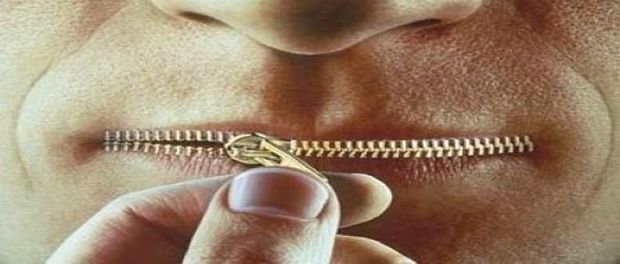 Quebec lawyers seem to have a knack for testing the limits of a lawyer’s ability to openly criticize the legal system.
When Montreal criminal lawyer Gilles Doré wrote an acerbic letter to then Quebec Superior Court Justice Jean-Guy Boilard criticizing him for being pedant, cantankerous and petty, the case wound up before the nation’s highest court and was thought by many to have settled the issue.
 Here we go again. Another skirmish between a prominent Quebec City lawyer and the provincial law society that has turned ugly.
Lu Chan Khuong alleges that administrators of the Barreau du Québec illegally profited from an increase in attendance fees totaling $501,000. Khuong alleges that the Barreau’s current administrators illicitly boosted attendance fees paid to them for participating in meetings held by the law society from $300 to $800 without changing regulations. Khuong alleges that administrators charged $400 for teleconferences, and up to $800 for attending reunions.
 The combination of market forces, increasingly stringent consumer demands and rapid technological developments means that it has never been more important for lawyers to invest and incorporate technology into their practice, asserts a report by the Quebec legal society that calls on members to shift away from hourly billing to alternative pricing arrangements.
 A week after Quebec’s legal society commended the federal government’s 2017 budget for investing new monies and resources in the justice system, the Barreau du Québec deplored the “lack of vision” shown by the provincial government in its budget.
In an unlikely turn of events, a husband and wife may end up leading the Quebec Bar.
 Lu Chan Khuong, the former president of the Quebec legal society who reluctantly resigned after a bitter and protracted fracas with the board of directors of the Barreau du Québec, recently announced that she is going to try her luck once again.
 For the “survival of the profession,” the Quebec legal society is calling on its members to shift away from hourly billing to alternative pricing arrangements to better respond to client’s needs, foster greater access to justice for citizens, and encourage a healthier and more balanced professional life for lawyers.
But at a time when approximately 70 per cent of Quebec’s private practitioners still charge by the hour, the Barreau du Québec recognizes that its call for a paradigm shift will require a “total cultural change” that will be met with resistance by many lawyers and law firms who have done well by the status quo, said Claudia Prémont, the president of the Quebec Bar, which recently published an 84-page study entitled “Hourly Billing: A Time for Reflection.”
Nearly three years after the president of the Quebec legal society warned the provincial government that prison conditions faced by Inuit inmates in northern Quebec were appalling and deplorable, the Quebec Ombudsman upbraided the government for turning a blind eye to the daily violation of basic human rights, unacceptable detention conditions, and systemic shortcomings in the administration of justice in Nunavik.

Unsanitary and overcrowded holding cells, nauseating odours, soiled bedding, inaccessible showers, sanitation facilities that fail to provide detainees with privacy, and prisoners having to eat their meals on the floor are among some of the more disturbing findings made by the Quebec Ombudsman Raymonde Saint-Germain who likened Nunavik’s detention and justice system to the Third World. Just as troubling were her findings that detainees are kept in cells 24 hours a day because there are no outdoor courtyards, with some detainees having to wait as long as two weeks in preventative custody. The Criminal Code of Canada prescribes a maximum waiting time of three days.
 Lu Chan Khuong, the former president of the Quebec legal society who reluctantly resigned after a bitter and protracted fracas with the board of directors of the Barreau du Québec, is back on the spotlight.
 Barely a couple of weeks after the former president of the Quebec legal society reluctantly resigned after a bitter and protracted fracas with the board of directors of the Barreau du Québec, Lu Chan Khuong is fighting back while raising the possibility that she may yet come back to seek another term if her electoral platform is not fulfilled by the new president.
 Lawyers work hard. More than half of Quebec lawyers work put in more than 40 hours a week. That’s not surprising for a profession whose image is intricately linked with workaholism.
What’s interesting is the differences between the sexes. Surprisingly, more women than men put in 60 hour-plus weeks than men, according to a report by Quebec’s law society. While nine per cent of women surveyed by the Barreau du Québec said they work more than a sixty hours a week, only six per cent of men made the same claim. However, more men than women log 51-to-60 hour work weeks, and more women than men work between 31-and-40 hours a week.